Foundations form the literal base of every structure, transferring loads from buildings into the underlying ground safely and efficiently. In Bunbury, Western Australia, foundation engineering takes on particular significance due to the region's diverse and often challenging geological profile. From the coastal sands of the Indian Ocean shoreline to the expansive clay soils further inland, understanding local ground conditions is paramount. A comprehensive approach to foundations encompasses site investigation, analysis, and design, ensuring long-term structural integrity for residential, commercial, and industrial projects alike. Neglecting this critical phase can lead to costly failures, making expert input essential for any development in the Greater Bunbury area.
Bunbury's geology presents a mixed bag that directly influences foundation choice and performance. Much of the city sits on the Swan Coastal Plain, characterised by Quaternary sands and limestone deposits, including the Tamala Limestone formation. These materials can exhibit variable bearing capacity and are susceptible to dissolution features. Moving east, older lateritic profiles and clay-rich weathered rock become dominant, introducing shrink-swell behaviour in reactive soils. This variability means a one-size-fits-all foundation solution is rarely appropriate. A detailed understanding of local stratigraphy, groundwater conditions, and potential for differential settlement analysis is critical to mitigate risks associated with these contrasting ground profiles.
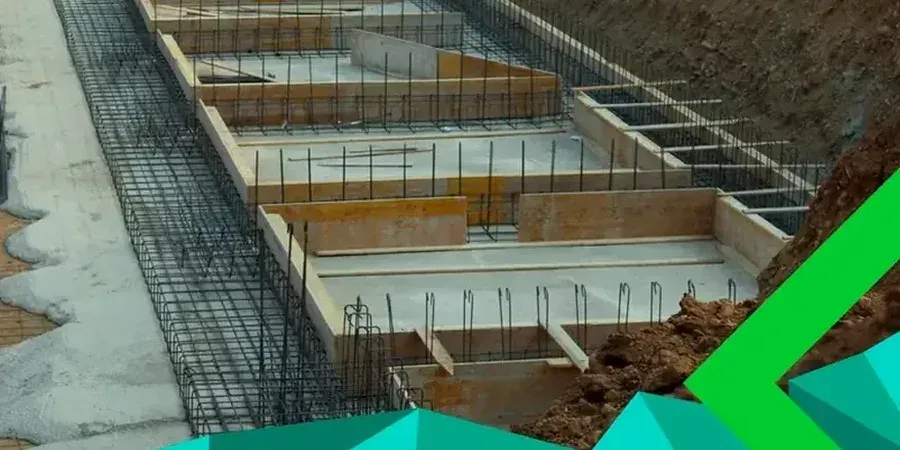
All foundation design and construction in Bunbury must comply with the National Construction Code (NCC) of Australia, which references key standards such as AS 2870 for residential slabs and footings and AS 2159 for piling. Given Bunbury's specific soil reactivity, classification in accordance with AS 2870 is a fundamental first step, particularly for shallow foundation design on reactive clay sites. For larger or more complex structures, geotechnical site investigations following AS 1726 guide the application of AS 5100.3 for bridge foundations or AS 4678 for earth-retaining structures. Adherence to these standards is not just a legal requirement but a practical necessity to manage the geotechnical hazards present in the region, including variable fill and seismic considerations.
The types of projects requiring rigorous foundation engineering in Bunbury are extensive. Low-rise residential developments on reactive clays demand carefully designed stiffened rafts or deep-piled solutions. Multi-storey commercial buildings or industrial warehouses with heavy floor loads often necessitate raft/mat foundation design or deep foundations to bypass weak near-surface soils. Infrastructure projects, such as bridges, port structures, and large retaining walls, rely on pile foundation design to reach competent bearing strata. Even renovations or extensions on existing buildings require assessment of foundations on fill, as many areas have undocumented historical earthworks. Each project type demands a tailored geotechnical strategy to ensure safety and durability.
Available services
Differential settlement analysis
→ Ver detalleBearing capacity analysis
→ Ver detalleFoundations on fill (analysis)
→ Ver detalleShallow foundation design
→ Ver detalleSeismic foundation design
→ Ver detallePile foundation design
→ Ver detalleRaft/mat foundation design
→ Ver detalleMicropile design
→ Ver detalleDriven pile design
→ Ver detalleCollapsible soil evaluation
→ Ver detalleQuick answers
What are the most common foundation problems encountered in Bunbury?
The most prevalent issues stem from reactive clay soils causing slab heave and cracking during wet-dry cycles, and from uncontrolled fill or soft sands leading to excessive settlement. Coastal limestone areas can also present risks of sinkhole formation and variable bearing capacity, requiring careful site-specific investigation.
How do Australian Standards dictate the foundation design process for a typical Bunbury home?
AS 2870 is the primary standard, which classifies the site based on soil reactivity and expected ground movement. This classification, determined by a geotechnical investigation, directly informs the required footing system, which could range from a standard slab-on-ground to a stiffened raft or piled footing for highly reactive or problematic sites.
When is a deep pile foundation necessary instead of a shallow footing system in this region?
Deep piles are typically required when competent bearing strata are too deep for economical shallow footings, on sites with thick layers of uncontrolled fill, soft estuarine clays, or loose sands. They are also used to resist uplift forces, control settlement of heavy structures, or meet specific seismic design requirements for critical infrastructure.
What is the role of a geotechnical investigation in the foundation design process?
The investigation is the non-negotiable first step. It quantifies subsurface conditions through boreholes and testing to determine soil strength, reactivity, and groundwater levels. This data informs bearing capacity, predicts settlement, and identifies hazards, allowing engineers to select a safe, compliant, and cost-effective foundation type tailored to the specific site.