Slope engineering in Bunbury addresses the critical interface between natural terrain and the built environment, encompassing the analysis, design, and remediation of both natural and constructed slopes. As Western Australia's third-largest city continues to expand along its coastal plain and into the Darling Scarp foothills, understanding slope behaviour becomes paramount for safe development. This category covers the full spectrum of geotechnical services required to manage slope-related risks, from initial soil erosion analysis through to comprehensive slope stabilization design, ensuring that residential subdivisions, transport corridors, and infrastructure assets remain stable over their design life.
Bunbury's geological setting presents specific challenges for slope management. The region is underlain predominantly by the Leederville and Yarragadee formations, comprising interbedded sandstones, siltstones, and shales that exhibit variable weathering profiles. The near-surface materials across much of the city consist of residual soils and colluvium derived from these sedimentary rocks, often with a clay-rich matrix that is susceptible to moisture-induced strength loss. Along the coastal fringe, Quaternary dune sands and Tamala Limestone introduce additional complexity, particularly where development interfaces with natural dune slopes. The pronounced seasonal rainfall pattern—with intense winter storms following prolonged dry periods—creates cyclic wetting and drying conditions that progressively weaken slope materials through desiccation cracking and subsequent infiltration, making slope stability analysis essential for long-term asset protection.
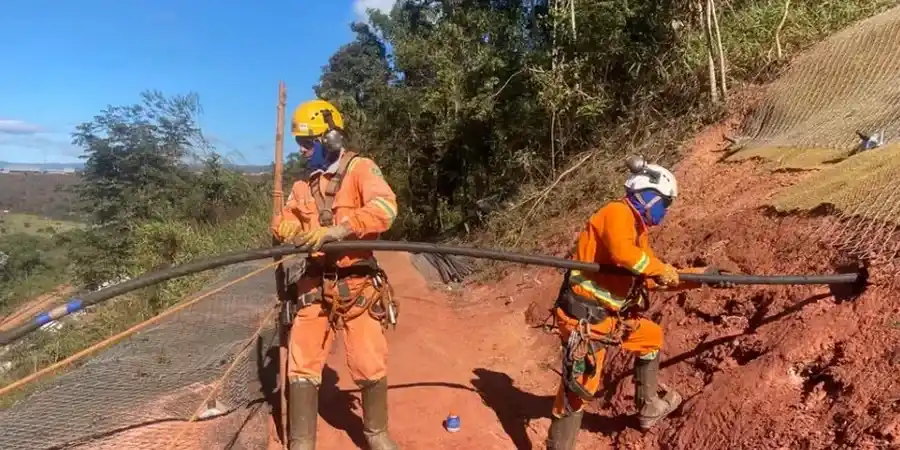
Regulatory compliance in Western Australia draws on several key standards that directly influence slope engineering practice. The Australian Geomechanics Society's Landslide Risk Management Guidelines (AGS 2007) provide the overarching framework for risk-based slope assessment, while AS 4678-2002 governs earth-retaining structures including anchored systems. Local government requirements within the City of Bunbury and surrounding shires typically mandate geotechnical assessment for developments on land with gradients exceeding 1:4 (approximately 14 degrees), or where previous instability has been documented. For major infrastructure, Main Roads Western Australia specifications require rigorous factor of safety (FS) calculation for both temporary and permanent works, with minimum acceptable values varying according to consequence categories defined in national guidance.
The types of projects requiring slope engineering input in the Bunbury region are diverse. Residential developments in areas such as Dalyellup and Gelorup, where housing encroaches onto dune slopes and lateritic breakaways, routinely demand site-specific assessments. Infrastructure corridors including the South Western Highway and the Bunbury Outer Ring Road project traverse terrain requiring debris flow analysis where steep catchments intersect transport routes. Coastal management initiatives addressing erosion along the Leschenault Inlet and adjacent dune systems benefit from integrated slope and erosion studies. Industrial developments on the port peninsula also present unique challenges where fill embankments and dredged material stockpiles require ongoing stability monitoring and engineered reinforcement solutions. Each project type demands a tailored combination of investigation, analysis, and design services matched to the specific geotechnical context and consequence profile.
Available services
Soil erosion analysis
→ Ver detalleSlope stability analysis
→ Ver detalleSlope failure analysis
→ Ver detalleDebris flow analysis
→ Ver detalleFactor of safety (FS) calculation
→ Ver detalleGeocell design
→ Ver detalleActive/passive anchor design
→ Ver detalleSlope stabilization design
→ Ver detalleRetaining wall design
→ Ver detalleMSE (Mechanically Stabilized Earth) wall design
→ Ver detalleDiaphragm wall design
→ Ver detalleSheet pile wall design
→ Ver detalleLandslide assessment
→ Ver detalleGeotechnical slope monitoring (monthly)
→ Ver detalleQuick answers
What are the most common causes of slope instability in the Bunbury region?
Slope instability in Bunbury typically results from a combination of geological and climatic factors. The interbedded sandstones and shales of the Leederville and Yarragadee formations weather to produce clay-rich soils with low shear strength when saturated. Intense winter rainfall following dry summers causes rapid pore pressure changes, while poor drainage, uncontrolled stormwater discharge, and excavation without adequate retention further contribute. Coastal dune sands are particularly prone to erosion-triggered failures during storm events.
When is a slope stability assessment required for development in Bunbury?
A slope stability assessment is generally required when developing on land with gradients steeper than 1:4 (approximately 14 degrees), where previous instability has been documented, or when proposed excavations or fills alter existing slope geometry. The City of Bunbury and surrounding shires typically mandate geotechnical reports as part of development applications for these conditions. Assessments are also triggered by proximity to watercourses, coastal zones, or infrastructure corridors where failure consequences are elevated.
What regulatory standards govern slope engineering in Western Australia?
Slope engineering in Western Australia is governed primarily by the Australian Geomechanics Society's Landslide Risk Management Guidelines (AGS 2007), which establish a risk-based framework for assessment and mitigation. AS 4678-2002 addresses earth-retaining structures including anchored walls. Local planning schemes administered by the City of Bunbury incorporate these standards through development controls. For state-managed infrastructure, Main Roads Western Australia specifications define minimum factor of safety requirements based on consequence categories and design life considerations.
How does the factor of safety relate to slope design decisions?
The factor of safety (FS) quantifies the margin between resisting and driving forces within a slope, directly informing design acceptability. In Western Australian practice, minimum FS values typically range from 1.3 for temporary works to 1.5 for permanent slopes under static conditions, with higher thresholds applied where failure consequences are severe. When calculated FS falls below acceptable levels, engineers specify remediation measures such as drainage improvements, reinforcement, or geometric modification to achieve the required stability margin.